U2’s “Street of Dreams” Is a Prayer for Justice, Freedom, and Shared Hope
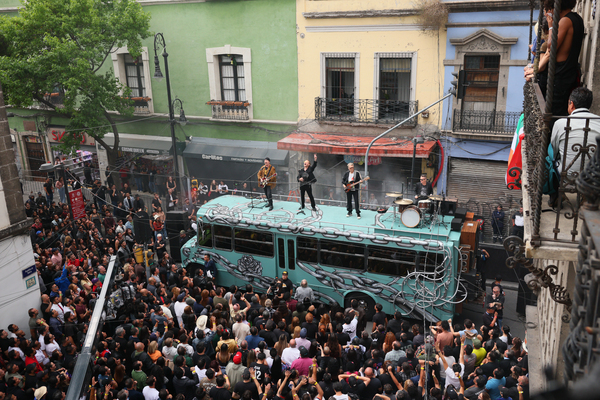
In “Street of Dreams,” U2 return to one of their central images: the street. Across the band’s work, streets can signify conflict, class, escape, belonging, protest, danger, or possibility. Here, however, the street becomes a route toward a civic dream. It is not a private fantasy or a place outside history. It is a shared space where people meet, travel, collide, and demand room for one another.
The song’s claim is simple but substantial: hope has to leave the individual mind and enter public life. “All the doors are open” presents the dream as inclusion, while “broken are the chosen” overturns the usual language of privilege. The people who carry the dream are not necessarily the secure or powerful. They are those marked by struggle, fatigue, loss, and the hard knowledge of what exclusion costs.
That language places the song in U2’s long tradition of prayer under pressure, where faith is neither certainty nor escape. Like “40”, the lyric addresses God from within human trouble, not from somewhere safely beyond it.
Yet “Street of Dreams” refuses despair.
Prayer becomes an opening move. The voice calls out because it still expects an answer, and because the act of calling out keeps the speaker connected to the world. The lyric does not claim that faith removes suffering. It suggests that faith can keep a person moving through it.
The Dream Enters Public Life
The Spanish refrain matters because it shifts the song from an abstract dream toward a place with people, language, movement, and consequence. La calle is the street: noisy, crowded, exposed, political, and alive. The repetition gives the phrase the character of a chant, as though the dream only becomes real when it is spoken by a crowd.
“All the doors are open” can sound like a promise of welcome, but it also carries a social demand. A street of dreams cannot exist while access, safety, dignity, and opportunity remain reserved for a few. The line “broken are the chosen” deepens the idea. Brokenness is not disqualification. It can become the condition from which empathy, solidarity, and moral clarity emerge.

Freedom That Reaches Beyond the Self
The second verse turns freedom into a relationship rather than a private possession: “Be here / Be free / Be yourself / And then free me.” The movement is crucial. The lyric does not stop at self-expression. To become free is also to become capable of freeing another person.
That is the song’s political core. Its language may seem close to affirmation, but it resists the isolated individualism of self-help culture. “Your fate gonna fight it” suggests that destiny is not something passively accepted; it is contested. “Your trust won’t be denied it” makes faith active rather than decorative.
Even the bus becomes symbolic. This is a collective journey. The speaker does not drive alone toward a private future. The community rides together toward the street of dreams. It is an ordinary image, yet it gives the song a grounded sense of purpose. The destination is not reached by retreating from people, but by travelling with them.
Justice in Motion, Love in Procession
When the song names “justice an obsession” and “love in a procession,” it moves from aspiration to public practice. Justice is not a passing concern. It occupies the mind, shapes action, and remains necessary when the world makes indifference easier. Love is not merely intimate feeling. It is a procession, visible in public and moving through the city.
The bridge intensifies that motion with “Break out / Break through / Break in.” Each phrase describes a different kind of change: escape from confinement, passage through resistance, and entry into spaces from which people have been excluded. The words have physical urgency. The dream needs pressure behind it.
“Random angels gonna guide you” brings grace down to street level. These angels need not be supernatural figures. They may be strangers, friends, organisers, artists, chance encounters, or acts of generosity that keep someone from being defeated by fear. U2’s idea of grace is often embodied. It appears through people showing up for one another.
A Response to the Ashes
“Street of Dreams” stands as an important counterpoint to the recent material on Days of Ash, especially “The Tears of Things”. That work faces political violence, grief, moral fatigue, and the danger of becoming emotionally hardened by history.
“Street of Dreams” does not deny that darkness. It answers it through movement, fellowship, and a stubborn openness to grace. The song understands that people can be wounded and still useful to one another. It understands that hope can be exhausted and still be worth protecting.


%20U2.jpg)


0 Achtung Babies:
Post a Comment